Precipitation Modeling
Our work focuses on creating models that improve how we measure predict and understand rain snow and other forms of precipitation
Understanding global precipitation remains one of the most important and most difficult problems in Earth system science. Rain and snow drive the water cycle and influence nearly every aspect of life from agriculture to energy to natural hazards. But the processes that govern them, convection, particle growth, and melting, occur at scales that are incredibly small compared to the resolution of satellite instruments and climate models.
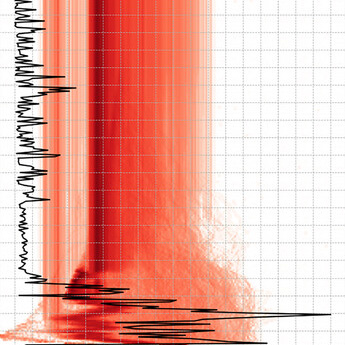
We are developing machine learning methods that bridge this gap. Using both supervised and unsupervised learning we extract patterns from radar and radiometer data to improve how we retrieve precipitation and represent it in models. From snowflake particle size distributions to global precipitation maps, we are working to reveal what the data are already telling us but has remained hidden in the noise.

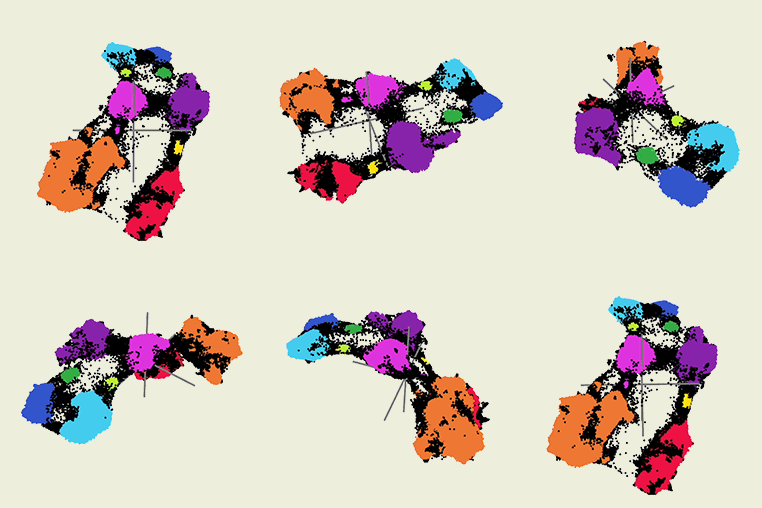
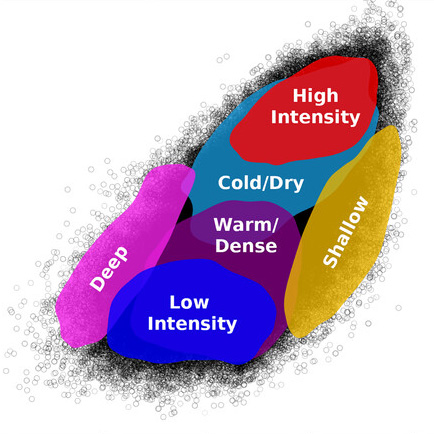
Some of our recent projects include: developing deep learning models to convert between microwave emissivity channels for better radiative transfer modeling of global precipitation, building physically interpretable networks that classify precipitation phase from satellite observations, and clustering precipitation profiles using nonlinear dimensionality reduction to identify evolutionary pathways in snow and rain formation.


We are continually looking to examine new and exciting precipitation products (e.g., satellite-based, reanalysis, model simulations), so please reach out if you have data you’d like to share!